

Table of Contents
Share
Instagram
Facebook
Linked In
Share Link
WhatsApp
What is Multimedia?
Let’s start from the beginning, without sounding too textbook-y.
Multimedia is simply the art and science of using more than one form of content to communicate your message. It blends visuals, audio, text, and interactive elements to create a richer, more immersive experience. Think of a blog post with embedded videos and infographics or a podcast that comes with show notes and social graphics or an Instagram carousel that doubles as a mini-course.

What is the Purpose of Multimedia?
The main purpose of multimedia is to reach different kinds of learners, engaging different senses, and creating content that actually sticks. In digital marketing, multimedia is the glue that holds your messaging together.
Here’s are the key points that illustrates why multimedia matters:
- It caters to different learning styles: Multimedia helps you connect with a wider audience by offering content in multiple formats.
- It boosts retention and recall: People are more likely to remember a message when it’s supported by visuals, sound, or interactive elements.
- It increases engagement: Videos, infographics, and interactive posts naturally attract more attention and clicks compared to static text content.
- It strengthens storytelling: A video can show emotion, a podcast can dive deep into ideas, and an infographic can break down complex topics.
- It supports accessibility
By offering content in various formats, you make it easier for people with different needs to access and understand your message.
What is a Multimedia Strategy?
Now that we’ve covered what multimedia is, let’s talk about why you need a strategy for it.
A multimedia strategy is your blueprint. It’s the thinking that goes into your content before you hit “record” or “publish.” It answers questions like: Why are we creating this content? Who are we talking to? What platforms are we using? What type of content fits the message best?
Imagine your brand as a character in a movie. Your multimedia strategy is the script, it defines how your brand talks, looks, feels, and acts across every channel. It ensures consistency, coherence, and clarity.
For example, let’s say you run a sustainable fashion brand. Your multimedia strategy might include short behind-the-scenes videos showing ethical manufacturing, podcasts discussing eco-trends, and infographics comparing fast fashion stats with sustainable alternatives. All of this content might be tailored for different platforms, but the core message remains intact, sustainability, style, and transparency.
Why Does a Successful Multimedia Strategy Matters?
A well-crafted multimedia strategy does more than checkboxes, it transforms how people experience your brand. When every video, image, and interactive element works in harmony, you create moments that resonate long after a scroll or a click. Here’s why getting it right is so important:
Deeper Connections: People remember how you made them feel. A thoughtful blend of visuals, sound, and text builds an emotional bridge between your message and their world, turning casual viewers into engaged fans.
Amplified Reach: Different people engage in different ways. By offering content that appeals to readers, listeners, and visual learners alike, you expand your footprint and invite new audiences to discover you.
Consistent Brand Experience: A unified strategy ensures your brand’s personality shines through, no matter where someone encounters you.
Efficient Resource Use: When you know exactly which formats serve your goals, you stop wasting time and budget on experiments that don’t move the needle. Every piece of content has a clear purpose and a place.
Measurable Impact: Strategy ties creative work to business outcomes. With goals and metrics in place, you can see what’s working, learn from what isn’t, and keep improving.
What Makes Multimedia Work and What Doesn’t?
Multimedia isn’t magic, it’s a craft. Just putting a video next to a blog post or an infographic in a carousel doesn’t guarantee engagement. What separates impactful multimedia from background noise is intent. So, what actually makes it click?
What Works | What Doesn’t |
Clarity over clutter Simple visuals and clear audio guide focus. | Random for “cool” Style without purpose adds noise. |
Platform-aware formats Right content for the right place. | One-size-everywhere Copy-pasting weakens the message. |
Story-first Every piece needs a beginning, middle, and point. | No narrative Empty content fades fast. |
Accessible to all Subtitles, alt-text, mobile-first design. | Excludes users No access = lost reach. |
Consistent look & voice Feels like the same brand everywhere. | Scattered tone Confuses and disconnects. |
Less is more Strong in a few formats > weak in many. | Too much, too fast Overkill dilutes impact. |
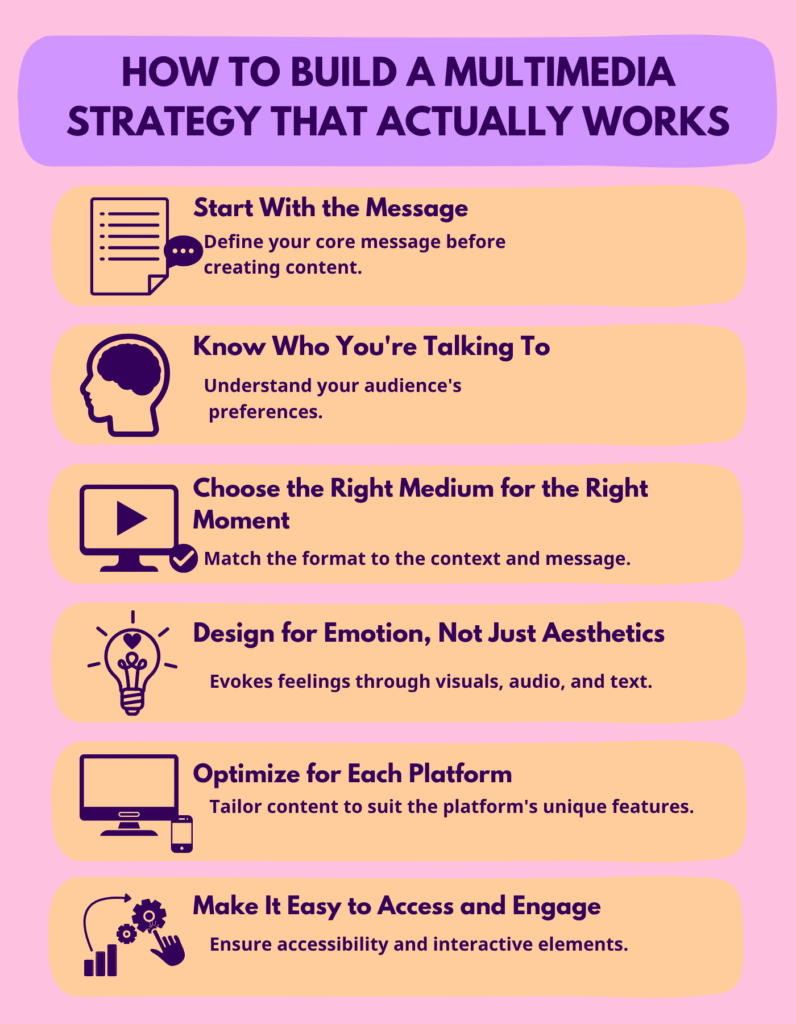
How to Build a Multimedia Strategy That Actually Works?
A strong multimedia strategy isn’t built overnight, or by accident. It’s a blend of intention, understanding your audience, and staying true to your message across every format. Here’s how to lay that foundation
Start With the Message
Before jumping into visuals or audio, get clear on what you want to say. Strip it down. What’s the one takeaway you want someone to remember?
Know Who You’re Talking To
Is your audience busy professionals? Students? Parents? What do they like to watch, read, or scroll through? Let their behavior shape your formats.
Choose the Right Medium for the Right Moment
A 30-second reel might grab attention, but a well-designed infographic can explain a complex idea. Pick the format that does the job best, not just the trendiest one.
Design for Emotion, Not Just Aesthetics
Good design isn’t just pretty, it makes people feel something. Use color, music, voice, and movement to add heart to your content.
Optimize for Each Platform
Don’t just shrink or stretch one piece of content across platforms. Redesign it with platform behavior in mind. What works on LinkedIn won’t fly on Instagram.
Make It Easy to Access and Engage
- Add captions.
- Use alt-text.
- Make buttons tap-friendly.
5 Signs Your Multimedia Strategy Needs a Rethink
Even with the best intentions, sometimes your content just isn’t hitting the mark. Here’s how to know when it’s time to step back and realign.
Engagement Feels… Flat
If your posts are getting impressions but little interaction, no clicks, shares, or comments, it’s a signal. People might see it, but it’s not making them feel anything.
Your Content Lacks Focus
Are you trying to squeeze too much into one piece? If everything’s important, nothing stands out. A clear focus is what turns noise into value.
Too Much “One-Size-Fits-All”
Posting the same video, caption, or graphic across every platform? That’s a red flag. What works on YouTube rarely works unchanged on LinkedIn or Instagram.
Inconsistent Branding or Tone
If your brand voice shifts from playful on Reels to robotic on your blog, it’s jarring. Consistency builds trust, and trust builds follow-through.
Your Audience Has Moved On
Still pushing long-form videos while your audience is binge-watching 60-second explainers? Trends shift. User habits evolve. And your content should, too.
Real Brands, Real Wins: How Multimedia Elevated Their Storytelling?
Multimedia helps shape how people feel when they see, hear, or interact with your brand. These 5 brands didn’t just use multimedia; they lived it, and that’s what made the difference.
Duolingo – The Green Owl That Won TikTok
Duolingo could’ve stayed in the lane of language learning apps, serious, structured, maybe even a little boring. But instead, they let their mascot, Duo the Owl, become the unexpected face of chaotic, hilarious, and oddly relatable content.
Their TikTok presence is strategic. Every skit, meme, or green-owl dance connects with young learners who are used to short-form video as their primary language. But even beneath the jokes, there’s subtle reinforcement of the brand’s core value: that learning a new language can be playful, human, and totally non-intimidating.
What makes it work? Duolingo respects the platform culture while keeping their brand personality consistent.
Spotify Wrapped – Data That Feels Like Magic
Every December, Spotify does something most brands only dream of, turns user data into a global, celebratory event. Spotify Wrapped isn’t just a yearly recap; it’s a multimedia love letter to every listener’s unique taste in music.
What could’ve been a boring list of stats becomes a colorful, sound-backed, animated journey. Users scroll through reels of their top artists, listen to surprise audio bites, and share vibrant graphics across social media like personal trophies. It’s the ultimate example of multimedia meeting personalization.
And the impact? Millions of users voluntarily promote Spotify just by sharing their Wrapped.
Headspace – A Calm Voice in the Noise
In a world overwhelmed by hustle culture and digital noise, Headspace found its lane, and gently walked into it. Their mission? To make mindfulness more accessible and less intimidating. And they achieved that by translating peace into every format.
From soothing podcast episodes to soft-toned YouTube animations, and from in-app guided sessions to gentle visual reminders on social media, Headspace crafts content that feels like what it’s meant to offer calm. Their color palette, voiceover style, music choices, and animations all whisper the same message: “You’re safe here.”
Zomato – The Art of Tasty Timing
Zomato isn’t just a food delivery app. It’s a cultural commentator, a mood-lifter, and a storytelling powerhouse. Whether it’s a one-liner push notification that makes you chuckle mid-meeting or a video ad that celebrates local flavors with stunning cinematography, Zomato knows how to speak to your stomach and your soul.
Their content doesn’t just promote food; it taps into everyday emotions. Missed your ex? There’s paneer biryani for that. Too lazy to cook? They’ve got memes ready. Their reels, infographics, tweet-style visuals, and culturally adapted scripts show that Zomato’s strength lies in listening to the moment and responding in a language people instantly connect with.
ZenZap Minds- Where Neuroscience meets Storytelling
At ZenZap Minds, mental health becomes a movement!
Led by mindset coach Harmandeep Kaur, ZenZap doesn’t just post inspirational quotes, it turns complex emotional topics into bite-sized, scroll-stopping videos and posts across Instagram, LinkedIn, and YouTube. Through ghostwritten content, animated reels, and multi-platform storytelling, her message of inner healing reaches thousands.
In just two months, her voice echoed through over 4,500 new accounts, and videos hit 10,000+ views, all without ad spend. This is multimedia not as a tool, but as a bridge, zeconnecting mental health awareness with the people who need it most.
Inspired by these wins? Yours could be next. Let’s build your multimedia voice that not only fits the platform, but lives in people’s minds. |
Conclusion
Multimedia is more than just a tool, it’s a way to connect, to share, and to bring your story into the world in a richer, fuller way. When you put heart into how you create and deliver your content, it stops being noise and starts becoming something real, something your audience feels. It’s not about perfect polish or chasing every shiny new trend, it’s about being thoughtful, clear, and true to your message. So take your time, experiment, listen to your audience, and let multimedia help your voice shine in ways that words alone never could.
Resources For You

Add Your Heading Text Here
Add Your Heading Text Here
FAQ's
1. What exactly counts as multimedia in digital marketing?
Multimedia includes any combination of text, images, audio, video, animations, and interactive elements. It’s about mixing different formats to create richer content that engages multiple senses.
2. Why is having a multimedia strategy important?
A clear multimedia strategy ensures your content is purposeful, consistent, and tailored for your audience and platforms. Without it, you risk creating scattered or ineffective messages.
3. How do I decide which multimedia formats to use?
Start by understanding your audience’s preferences and the platforms you’re targeting. Choose formats that suit the message you want to deliver and the way your audience likes to consume content.
4. Can multimedia really improve engagement?
Yes! Multimedia can make your message more memorable, appeal to different learning styles, and encourage interaction, all of which boost engagement and connection.
5. What are common mistakes to avoid with multimedia?
Avoid overloading content, using flashy elements that don’t serve your message, ignoring platform specifics, and neglecting accessibility features like subtitles and alt-text.