

Table of Contents
Share
Instagram
Facebook
Linked In
Share Link
WhatsApp
What Is Brand Storytelling?
Brand storytelling is a method in which entrepreneurs create a significant story around their company, their products, and their values. It is not merely storytelling; it is the process of developing a powerful narrative that creates an emotional bond with the audience.
While marketing centers on the benefits and features of a product, brand storytelling centers on the human elements that connect to people’s dreams, aspirations, difficulties, and identities. It is about sharing genuine stories that convey your brand’s mission, vision, and influence in a manner that speaks to customers at an emotional level.
To bring this to life, focus on
- Share Your Origin Story
- What sparked your founder’s passion?
- Which core values guided those first, uncertain steps?
- Highlight Your Stepping Stones
- Celebrate early wins without glossing over the effort behind them.
- Describe the pivots and insights that reshaped your path.
Why Is Brand Storytelling Important?
Brand storytelling matters because it establishes a bridge between the company and the consumer. Humans are inherently designed to react to stories, and brands that leverage storytelling successfully are able to connect with emotional branding, leading to increased customer interaction and loyalty.
In a busier marketplace, facts, statistics, and generic marketing messages get lost, but a good story gets remembered and passed on. Storytelling adds personality and soul to your brand and makes your customers view you as not just a service or product provider, but somehow more.
Storytelling also helps distinguish your brand by presenting your distinct purpose, values, and vision. Storytelling supports brand positioning through storytelling by making it clear what you believe in, whom you help, and why your brand exists. In brief, it turns customers into active participants in your brand’s journey, building trust, connection, and long-term loyalty.
Key Elements of a Good Brand Story
A good brand story consists of a number of key elements that collectively create an emotional and authentic experience for the audience. The first essential element is the genuine founder’s story. Discussing actual challenges, inspirations, and successes makes the brand and brand story real and relatable.
The other essential component is a definite purpose and strong values driving the story and establishing a richer meaning. Strong brand stories also involve strong characters, in this case, the entrepreneur, the team, or customers affected positively. Every great story contains an emotional journey that introduces challenge or conflict, creates suspense, and resolves in a fulfilling transformation or conclusion.
Lastly, a compelling brand story needs simple and consistent brand messaging that resonates with the brand’s personality through all forms of communication. With these considerations at the forefront, entrepreneurs can create a brand story that is not only captivating but also lasting.
Key elements to include here are
- Own Your Difficulties
- Be candid about cash‑flow crunches, product flops, or moments of self‑doubt.
- Show vulnerability; when you admit what kept you up at night, people see themselves in your shoes.
- Reveal the People Behind the Logo
- Put faces and names to your mission: founders, team members, even standout customers.
- Connect personal passions (art, sustainability, community) to your brand values.

The Ultimate Brand Storytelling Framework for Entrepreneurs: 4 P System
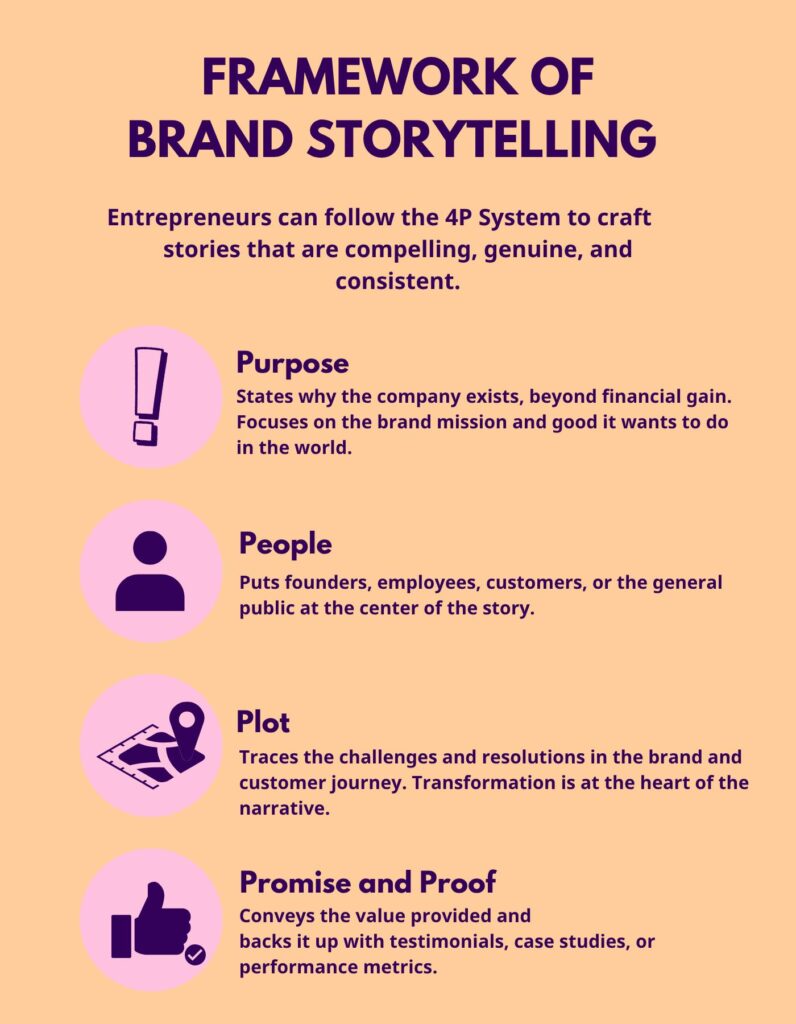
Entrepreneurs can follow a branded storytelling framework that guarantees their stories are compelling, genuine, and consistent. Below, we have briefly highlighted the 4 P System: Purpose, People, Plot, Promise, and Proof.
Purpose
The first piece of the framework is Purpose, which states the reason why the company exists aside from making money. It’s about what the mission is and the good the brand wants to do in the world.
People
The second element is People, bringing attention to the individuals at the center of the story, e.g., founders, employees, customers, or even the general public.
Plot
The third is Plot, tracing out the problems, hardships, and obstacles that the brand and the customer experience, and how they are resolved. Conflict and transformation lie at the core of emotionally compelling stories.
Promise and Proof
The fourth and last element is Promise and Proof, in which the entrepreneur explains clearly the value they provide and supports it with testimonials, case studies, or performance metrics.
5 Effective Brand Storytelling Techniques Entrepreneurs Need to Utilize
Entrepreneurs have a number of brand storytelling techniques at their fingertips that can engage audiences and inspire action. By applying these methods creatively, entrepreneurs can build captivating narratives that leave a lasting impact.
1. Visual storytelling is one such technique, employing photography, video, infographics, and design to tell stories more vividly and memorably.
Examples:
- Nike’s “Dream Crazy” campaign featuring powerful, cinematic footage of athletes overcoming odds, uses bold visuals and stirring voice‑over to forge an emotional connection with viewers and reinforce Nike’s “Just Do It” ethos.
- Karishma from FabUp produced a time‑lapse video series showing her upcycling thrift‑store finds into chic, wearable outfits, pairing “before” and “after” shots with close‑up details and personal voice‑over to narrate her sustainable‑fashion journey and inspire eco‑conscious audiences.
2. User-generated content is also a very effective technique, in which customers share their experience and happiness, providing authenticity and credibility to the brand’s narrative.
Example:
- Coca‑Cola’s #ShareACoke campaign invited people worldwide to snap and share photos of personalized Coke bottles bearing their names, turning everyday consumers into brand ambassadors and flooding social feeds with genuine, heart‑warming moments.
3. Serial content, like blog series, video episodes, or newsletters, enables entrepreneurs to unfold a brand narrative over time, holding audiences in suspense and wanting more.
Example
- Starbucks’ “Upstanders” documentary series releases weekly episodes profiling ordinary people doing extraordinary good, keeping viewers tuning in, subscribing, and associating the brand with positive community impact.
4. Interactive storytelling methods, such as immersive websites or story maps, involve audiences and create emotional engagement through the illusion of exploration and participation.
Example
- Spotify Wrapped turns year‑end listening data into an interactive experience, users can click through personalized stats, share colorful graphics on social media, and literally “play” their own story of the year in music.
5. Live storytelling via webinars, interviews, and social media live streaming infuses immediacy and rawness into the brand story.
Example
- Sephora’s Instagram Live beauty tutorials feature make‑up artists creating looks in real time, answering viewer questions on the spot, and showcasing new products, bringing authenticity and spontaneity to the brand’s narrative.
How Entrepreneurs Can Master Brand Storytelling in the Digital Age?
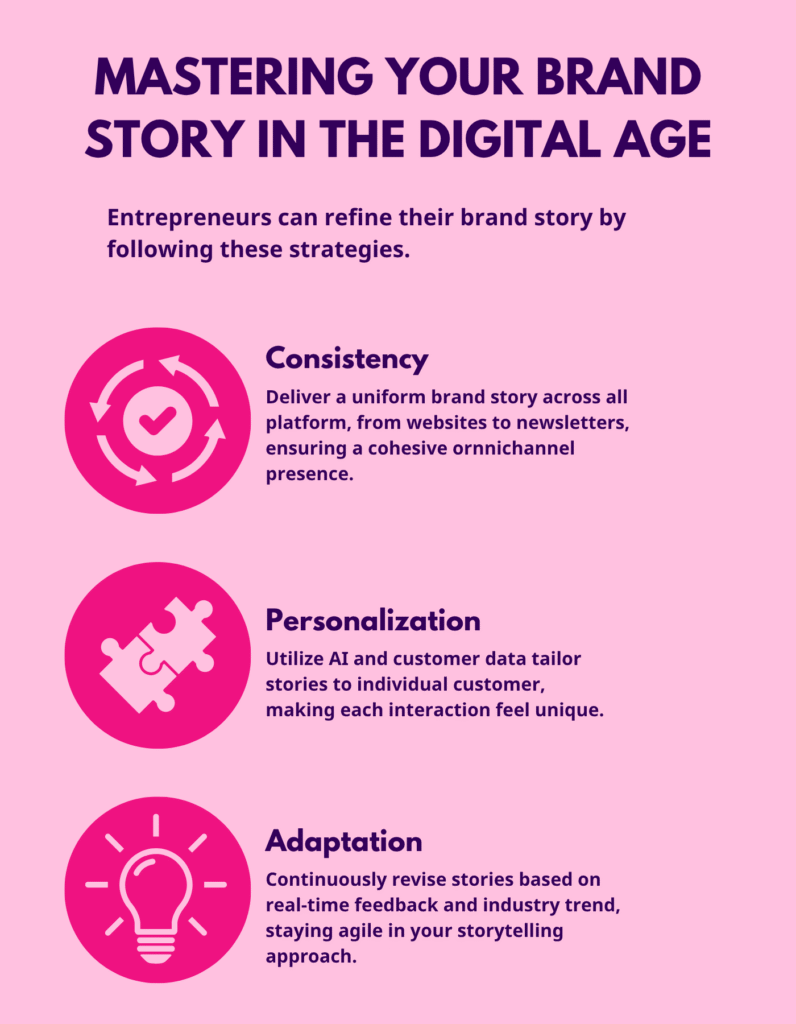
Consistency across all omnichannel touchpoints is essential, and the brand story should be uniform on websites, blogs, email newsletters, podcasts, and social media. The entrepreneurs must then target micro-moments with fast, emotive stories that can be adapted to fit busy digital lives.
Personalization, via AI and customer data, to adapt branches of the brand story to a range of customers, is also an important consideration so that the narrative feels more individualized and real.
Last but not least, entrepreneurs need to be nimble, constantly revising and retooling their brand story with real-time user feedback and industry trends. Whoever can learn storytelling in the modern era will position themselves to be better able to engage contemporary audiences and achieve lasting business growth.
How Entrepreneurs Can Establish a Strong Brand Through Social Media Storytelling?
Social media offers entrepreneurs the unprecedented ability to establish a strong brand by telling stories. Various platforms demand various storytelling styles. Instagram is best suited for behind-the-scenes moments and day-in-the-life stories, LinkedIn is best for detailed founder stories and thought leadership articles, and Twitter is best at crafting short, powerful story threads.
Business owners can execute hashtag campaigns to get customers and followers to share their own stories about the brand, building a community-driven narrative that boosts trust and authenticity. Social proof and emotional bonding are also generated by sharing testimonials and customer success stories on social media.
Uniformity in visual identity, for example, retaining a signature style, typography, and color scheme, makes it easy for all the stories to be immediately identified as belonging to the brand’s world.
Using social media storytelling strategies effectively helps entrepreneurs reach wider audiences, personalize their brand, and create more intimate, long-term relationships with their audience.
Best Brand Storytelling for Indian Entrepreneurs
Indian entrepreneurs can pick up some valuable tips by reading the greatest brand fables, particularly from the country’s own vibrant entrepreneurial scene.
The Zomato Story
Zomato, initially a basic restaurant menu scanning company, employed witty, hyperlocal brand storytelling on social media platforms to emerge as one of India’s greatest food-tech brands. The capacity of the brand to capture cultural subtleties and add humor to its brand story helped the brand become extremely endearing to city youth.
The Dabur Story
Dabur is yet another great case in point with a brand story grounded in Ayurveda and ancient Indian wellness. Emotional branding helped Dabur bring generations of customers in touch with a heritage of reliability, natural cures, and wellness.
The Amul Story
Some examples include Amul, which has established a strong emotional and cultural bond with its narrative through regular, relevant cartoons.
The Paper Boat Story
Paper Boat by Hector Beverages tapped into nostalgia and childhood memories by packaging traditional Indian drinks, like aam panna, kokum, and jaljeera, in pouches that carry short, evocative stories on each pack.
Campaigns such as “Summer of Serendipity” invited consumers to share their own fond memories tied to these flavours, transforming a simple beverage purchase into an emotional journey across generations.
The Chumbak Story
Chumbak was born out of its founders’ frustration with bland travel souvenirs. They decided to celebrate India’s vivid culture through quirky, design‑driven products, each item accompanied by playful narratives that spotlight everyday Indian quirks. Through colorful visuals, witty copy, and a blog that doubles as a cultural diary, Chumbak turns home décor and accessories into joyful storytelling touchpoints.
Conclusion
Storytelling of brands has become the heart of contemporary marketing, particularly for entrepreneurs looking to create significant, enduring brands. A strong brand narrative resonates with the audience’s emotions, aspirations, and values, forging deeper connections than transactional relationships. Business leaders who invest in creating genuine brand narratives can distinguish themselves in saturated markets, foster loyalty, and generate sustained growth. By learning storytelling structures, adopting visual and social media approaches, and adapting to the digital age, business leaders can keep their brands top of mind and relevant.
Resources For You

Add Your Heading Text Here
Add Your Heading Text Here
FAQ's
1. How do I begin brand storytelling as an entrepreneur ?
Begin by establishing your brand purpose and writing about your own story as a founder. Emphasize the problems you encountered, the lessons you learned, and the values that you believe in. Utilize these building blocks to craft real stories for your website, blog, and social media channels.
2. What makes a good brand story ?
A good brand story has real characters, good conflicts and challenges, emotional ups and downs, and a satisfying outcome. It adheres to the brand’s values, purpose, and voice, and is communicated consistently through all channels of marketing.
3. How small businesses can use storytelling ?
Small businesses can leverage storytelling by sharing customer testimonials, behind-the-scenes glimpses, and personal stories about their brand journey. Using authentic, relatable content across social media, blogs, and email newsletters helps small businesses build strong emotional connections with customers.
4. What are the 5 C’s of brand storytelling ?
The five C’s of brand storytelling are Core (defining purpose), Characters (heroes and protagonists), Conflict (challenges faced), Climax (turning points and transformations), and Conclusion (the ultimate value delivered to the customer).
5. How often should I publish brand stories
Entrepreneurs should strive for a steady storytelling cadence that works for their audience and resources. This might involve weekly blog posts, daily social media stories, monthly newsletters, and quarterly customer success story spotlights. Steadiness keeps the brand’s story current, compelling, and front of mind for the audience.